GEO vs SEO: What’s Changed and What Still Matters
Learn how generative engine optimization fits into your existing SEO strategy, what to prioritize, and how to stay visible in both traditional and AI-driven search.
Generative AI has changed how people find information. Platforms like ChatGPT, Claude, Google’s AI Overviews, and Perplexity now synthesize answers from multiple sources — often without the user ever clicking a link. For marketers, this raises a real question: Does traditional SEO still matter, and how does GEO vs SEO fit into a modern search strategy?
The short answer: generative engine optimization (GEO) is not a replacement for SEO, but it requires a meaningful expansion of how brands think about visibility. Having worked on SEO and GEO strategy at Gen3 Marketing, a full-service digital marketing agency, since 2018, I’ve watched search evolve through algorithm updates and SERP redesigns. The emergence of AI SEO signals a real shift, but it’s not the paradigm-shattering disruption some are making it out to be.
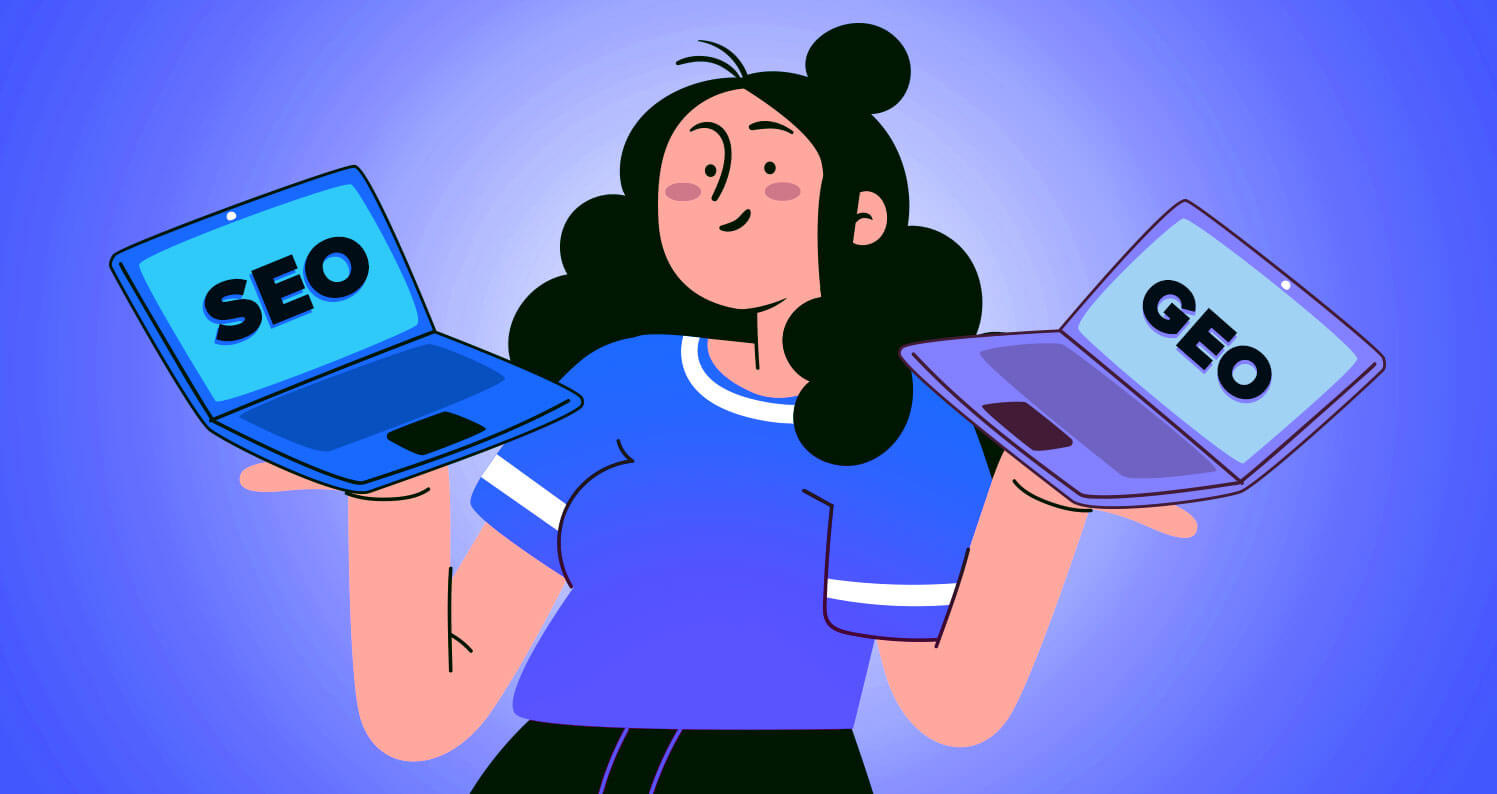
What is the difference between SEO and GEO?
SEO optimizes your website to rank in traditional search results by earning clicks from a list of links through keyword relevance, technical health, backlinks, and content quality.
GEO (generative engine optimization) optimizes your content so AI-powered platforms can discover, interpret, and cite your brand when generating answers to user queries.
The core difference: SEO earns a position on a results page. GEO earns a place in the answer itself. But these aren’t opposing strategies, and our perspective at Gen3 has been consistent: a strong GEO strategy should complement and refine your existing SEO priorities.
How Zero-click AI Search Changes Brand Visibility
The biggest shift is the growth of zero-click search. When AI engines synthesize comprehensive answers at the top of the page, users often get what they need without visiting any website. AI Overviews now appear in a significant and growing share of informational queries, especially at the top of the funnel — a pattern that’s accelerating as search engines deepen their AI integrations.
Even if your content ranks well in traditional results, your brand may be invisible during early-stage research. Organizations that lack brand-specific content on their own sites sometimes find third parties appearing in AI results for their own branded queries. That’s a visibility problem keyword optimization alone can’t solve.
4 GEO Strategies That Go Beyond Traditional SEO
While the foundation is familiar, GEO and LLM optimization demand some specific adjustments:
1. Answer Questions Directly
AI engines favor content that states the answer up front and supports it with evidence. Bury the lead and you’ll get passed over.
2. Build Entity Clarity
AI needs to understand what your brand is, what it does, and why it’s credible. Comprehensive “about” content, clear product descriptions, and consistent brand information across every touchpoint all matter.
3. Diversify Your Presence
AI pulls from review platforms, publications, social media, and news coverage, not just your website. A site-only optimization strategy leaves significant AI visibility on the table.
4. Rethink Your Metrics
Rankings and organic sessions don’t capture the full picture anymore. Track brand mentions in AI responses, monitor referral traffic from AI platforms, and stay current with how SERPs continue to evolve.

An integrated approach: combining team expertise and performance data to optimize for both traditional and AI-driven search.
A Practical Framework for Integrating GEO Into Your SEO Strategy
The brands seeing the best results right now aren’t choosing between SEO and GEO. They’re running an integrated strategy that strengthens both. Here’s how to approach it:
Audit Your AI Visibility
Before you optimize, understand where you stand. Run key brand and category queries through ChatGPT, Perplexity, Google AI Overviews, and other major AI platforms. Is your brand mentioned? Are competitors being cited instead? Where are the gaps?
Strengthen Your Content Around Real Expertise
Move beyond surface-level keyword targeting. Publish original research, detailed guides, case studies, and expert perspectives that AI models recognize as authoritative. This is content that serves traditional search and generative engines simultaneously — and directly supports E-E-A-T signals that both Google and AI platforms weigh heavily.
Invest In Structured Data
Schema markup helps AI engines understand the relationships between your content, products, and brand. Product schema, FAQ schema, organization markup, and author schema all contribute to how clearly AI can interpret and reference your information.
Prioritize Off-site Authority Building
Performance PR, strategic affiliate partnerships, earned media coverage, and presence on high-authority industry platforms all feed the signals that AI engines use to assess credibility. The intersection of AI, Google, and publisher partnerships is where smart brands are focusing right now.
Keep Your SEO Fundamentals Strong
None of the GEO-specific tactics above replace the need for solid technical SEO, thoughtful keyword strategy, and quality content development. SEO best practices continue to evolve, and staying current ensures your site remains competitive in traditional results while building the AI visibility foundation your brand needs in 2026.
Frequently Asked Questions About GEO and SEO
What is the difference between GEO and SEO?
SEO (search engine optimization) focuses on ranking your website in traditional search results through keyword relevance, backlinks, and technical health. GEO (generative engine optimization) focuses on making your content discoverable and citable by AI-powered platforms like ChatGPT, Google AI Overviews, and Perplexity when they generate answers to user queries. The core distinction: SEO earns a position on the results page; GEO earns a place in the answer itself.
Does GEO replace SEO?
No. GEO doesn’t replace SEO, it extends it. Strong technical SEO, quality content, and authoritative backlinks remain essential. GEO adds a layer of optimization that ensures your brand is visible in AI-generated answers, not just traditional search results. The most effective approach integrates both.
How do I know if my brand is visible in AI search?
Run your key brand and category queries directly through ChatGPT, Perplexity, Google AI Overviews, and similar platforms. Note whether your brand is mentioned, which competitors appear instead, and what sources are cited. This AI visibility audit is the foundation of any effective GEO strategy.
What content performs best in AI-generated answers?
Content that answers questions directly, demonstrates clear expertise, and is supported by authoritative sources. Original research, expert perspectives, well-structured definitions, and content with strong E-E-A-T signals consistently perform well in AI citations. Structured data, particularly FAQ and organization schema, also improves how AI engines interpret and reference your content.
Where Search Is Headed, And How to Stay Visible
GEO isn’t a replacement for SEO, it is an extension of it — one that reflects how users are increasingly discovering and consuming information through AI-powered platforms. As part of a forward-looking SEO strategy for 2026 and beyond, brands that recognize the overlap, strengthen their fundamentals, and layer in the adjustments of AI visibility demands will be the ones that stay competitive.
The core principles haven’t changed: deliver genuine value, demonstrate clear expertise, and meet user needs. The places where those principles get rewarded have simply expanded.
If your brand is navigating this shift and looking for clarity on where to invest, our team can help. We build integrated search strategies that drive results across every channel where your customers are looking.

Stephanie Nill is the Associate Director of SEO & AI Search (GEO) at Gen3 Marketing, where she has led complex strategies to drive growth and visibility for clients across a range of industries since 2018. She specializes in both SEO and GEO, with expertise spanning on-page optimization, technical SEO, and content strategy – helping clients achieve scalable, sustainable success.