
The Case for Micro and Nano Influencers: Why Smaller Creators Are Winning Bigger in Influencer Marketing
Discover why micro and nano influencers are driving higher engagement and ROI in 2026.

For years, influencer marketing followed one simple rule: bigger audiences meant better results. Brands invested heavily in celebrity creators and social media personalities with millions of followers, assuming that more reach automatically translated into more sales.
Today, that assumption is changing.
Micro and nano influencers are redefining influencer marketing by delivering higher engagement rates, stronger audience trust, and better return on investment than many larger creators. Rather than focusing on vanity metrics like follower count, successful brands are building diversified creator portfolios that prioritize authentic connections and measurable business outcomes.
As the creator economy continues to evolve in 2026, brands are discovering that meaningful influence often comes from smaller, niche communities—not massive audiences.
Whether you’re launching your first creator campaign or refining an existing micro influencer marketing strategy, understanding why smaller creators consistently outperform larger influencers can help you maximize both engagement and influencer marketing ROI.
What are micro and nano influencers?
Micro and nano influencers are content creators with highly engaged niche audiences who often generate stronger relationships and higher engagement than larger creators.
While follower counts vary slightly across platforms, the industry generally recognizes the following influencer tiers:
|
Influencer Tier |
Typical Followers |
Primary Strength |
|
Nano Influencers |
1,000–10,000 |
Highly engaged niche communities |
|
Micro Influencers |
10,000–100,000 |
Trusted expertise with growing reach |
|
Macro Influencers |
100,000–1 million |
Large audience awareness |
|
Mega Influencers |
1 million+ |
Mass reach and celebrity visibility |
Nano influencers might be the local fitness coach sharing daily workout tips, the skincare enthusiast documenting their routine, or the book reviewer with a passionate following. Micro influencers have expanded their audience while maintaining the authenticity that attracted followers in the first place.
For years, many brands overlooked these creators in favor of celebrities and household names. Today, they’re becoming the foundation of modern influencer marketing strategies because they consistently deliver stronger engagement and more authentic conversations.
Successful influencer marketing isn’t about reaching the most people, it’s about reaching the right people.
Why do micro and nano influencers have higher engagement rates?
Micro and nano influencers consistently achieve higher engagement rates because they build genuine relationships with their audiences instead of broadcasting to them.
Research across multiple social platforms continues to show a clear pattern: as follower counts increase, engagement rates typically decrease.
Average engagement rates often look like this:
- Nano influencers: 4–8%
- Micro influencers: 2–5%
- Macro influencers: 1–3%
- Mega influencers: often below 1%
This means a creator with 5,000 loyal followers can sometimes generate more meaningful conversations than someone with five million passive followers.
The reasons are structural rather than coincidental.
Smaller creators actively respond to comments, answer direct messages, and participate in conversations with their communities. Their audiences don’t simply consume content—they interact with the creator regularly.
They post about a single niche with the kind of obsessive depth that signals genuine expertise. Their feeds aren’t curated by a manager. They’re curated by an actual person who cares about the topic. When a nano or micro influencer recommends a product, it lands differently because the audience has been trained, over hundreds of small interactions, to treat that recommendation as a real opinion rather than a sponsored placement.
That difference compounds. The bigger an account gets, the more it functions like broadcast media. The smaller it stays, the more it functions like a conversation.
How smaller creators build audience trust (and why it outperforms reach)
The biggest shift in consumer behavior over the past few years isn’t that people stopped trusting ads. It’s that they stopped trusting anything that feels like an ad. And the larger an influencer’s audience, the more their content reads like advertising, partly because it often is.
Audiences have gotten remarkably sophisticated at detecting commercial intent. They notice when a creator’s “favorite” product changes every month. They notice the disclosure-free placements, the suspiciously uniform praise, the captions that sound like press releases. The cost of that detection isn’t just skepticism toward a single post. It’s a slow erosion of credibility for the entire channel.
Micro and nano creators sidestep this problem almost by default. Their partnership economy is smaller, their endorsements feel more deliberate, and their audiences are typically interacting with them about a specific area of life: skincare for sensitive skin, vintage mechanical keyboards, lap-swimming form, fermentation experiments, parenting toddlers with sensory needs. Within that niche, the creator isn’t competing for attention against the entire internet. They’re functioning as the trusted voice in a specific room.
That trust translates into action in ways that raw reach never will.
Why Micro and Nano Influencers Deliver Better ROI
Influencer marketing ROI improves when brands prioritize relevance, engagement, and long-term relationships instead of simply purchasing reach.
There’s also a much less philosophical reason brands are leaning into smaller creators: the math.
A single post from a mega influencer can run into six figures. The same budget, redeployed across a portfolio of 50 to 100 nano influencers, often delivers measurably better returns on ad spend. This approach provides several advantages:
- More total engagement per marketing dollar
- Access to multiple niche audiences
- More authentic user-generated content for future campaigns
- Greater opportunities for long-term brand ambassadors
- Better testing across different creative styles and messaging
Smaller creators are also more flexible to work with. Many nanos will partner for product gifting alone, especially in beauty, fashion, books, and food. Micros typically charge real fees, but those fees are negotiable in ways that big-creator rate cards simply are not. Briefs can be co-created. Content can be iterated on. Campaign timelines can flex.
Over time, because the relationships are smaller and more direct, brands can build long-term collaborations rather than one-off transactions. A nano creator who has worked with a brand for six months becomes a genuine ambassador. A mega influencer working with the same brand for six months has probably also worked with three competitors in the same period.
This relationship-first approach reflects one of the biggest influencer marketing trends shaping the current creator economy.
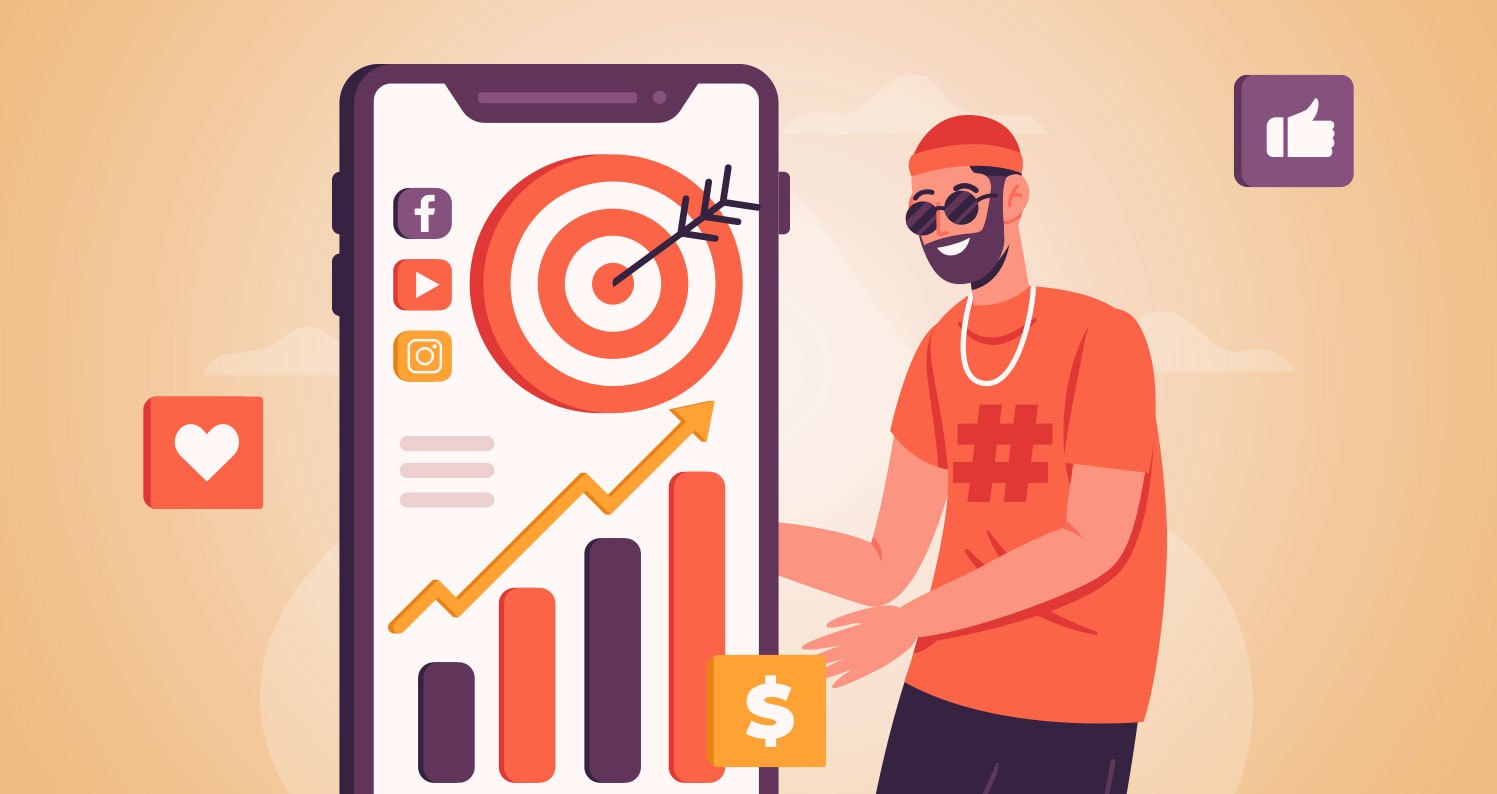
Spreading your campaign budget across a portfolio of targeted micro and nano influencers helps deliver measurably better returns on ad spend and higher engagement rates.
How To Build a Micro and Nano Influencer Strategy
The brands quietly winning at influencer marketing right now tend to do a few things consistently.
1. Build a Creator Portfolio Instead of Relying on One Influencer
Rather than investing your entire budget in a single high-profile creator, spread your investment across multiple micro and nano influencers. This diversified approach reduces risk, expands your reach into multiple communities, and provides more opportunities to identify top-performing partnerships.
Think of influencer marketing as building a media portfolio—not making a single bet.
2. Prioritize Audience Fit Over Follower Count
The most valuable creator isn’t always the one with the largest audience.
Instead, evaluate creators based on:
- Audience demographics
- Interests and niche expertise
- Engagement quality
- Brand alignment
- Content consistency
- Previous brand partnerships
A nano influencer with 5,000 followers who perfectly matches your target customer can generate significantly better results than a macro influencer whose audience has little interest in your products.
3. Give Creators Creative Freedom
Your creators know their audiences better than anyone.
Instead of providing rigid scripts, establish campaign objectives, key messaging, and brand guidelines while allowing creators to communicate in their own voice. Authentic content consistently outperforms overly produced advertisements because it feels genuine to followers.
4. Measure the Metrics That Matter
Follower count and impressions are useful awareness metrics, but they don’t tell the whole story.
Brands should measure:
- Engagement rate
- Click-through rate (CTR)
- Conversion rate
- Cost per acquisition (CPA)
- Return on ad spend (ROAS)
- Sentiment in comments
- User-generated content created
- Customer lifetime value (CLV)
These metrics provide a much clearer picture of influencer marketing ROI than reach alone.
5. Integrate Influencer Marketing into Your Broader Marketing Strategy
Influencer campaigns are most effective when they support your broader digital marketing efforts.
For example, influencer-generated content can strengthen paid social campaigns, provide fresh creative assets for advertising, support content marketing initiatives, and improve overall brand visibility. Coordinating creator partnerships with SEO/GEO, paid media, email marketing, and analytics creates a more cohesive customer journey and helps maximize the value of every campaign.

Micro and nano creators thrive in highly focused niches, like skincare and beauty, where they function as a trusted voice rather than a corporate advertisement.
Common Mistakes Brands Make with Influencer Marketing
Even experienced marketers can fall into common traps when launching creator campaigns. Avoid these mistakes:
- Choosing creators based solely on follower count. Engagement and audience quality are stronger indicators of campaign success.
- Treating influencer partnerships as one-time transactions. Long-term collaborations often build more trust and stronger performance.
- Over-controlling creative content. Authenticity is one of the biggest reasons influencer marketing works.
- Ignoring campaign measurement. Tracking conversions, engagement, and customer acquisition is essential for optimizing future campaigns.
- Failing to diversify creator partnerships. A balanced portfolio of creators helps reduce risk while expanding audience reach.
The future of Influencer Marketing in 2026: Why trust at scale beats follower count
Influencer marketing is maturing into something that looks less like celebrity endorsement and more like community-based recommendations.
As consumers continue to seek authentic recommendations over polished advertising, brands are investing in creators who have earned genuine trust within their communities.
This shift reflects broader changes across the creator economy. Social commerce, user-generated content (UGC), affiliate partnerships, and creator-led storytelling are becoming increasingly important components of successful digital marketing strategies.
The brands seeing the strongest results aren’t simply buying attention—they’re building long-term relationships with creators who genuinely connect with their audiences.
For many organizations, success no longer comes from finding the biggest influencer, it comes from building a network of trusted voices that collectively reach the right customers with authenticity and credibility.
In 2026 and beyond, influencer marketing rewards depth of relationship over breadth of reach.
Build an Influencer Strategy That Drives Results
Micro and nano influencers have changed the way brands approach influencer marketing. By focusing on authentic relationships, engaged communities, and measurable business outcomes, smaller creators consistently deliver stronger engagement, greater audience trust, and better return on investment than many celebrity partnerships.
Whether you’re launching your first influencer campaign or scaling an established creator program, success starts with a strategy built around the right audiences, not simply the biggest follower counts.
At Gen3 Marketing, we help brands develop integrated influencer marketing strategies that work alongside SEO/GEO, paid media, content marketing, analytics, and performance marketing to drive sustainable growth.
Ready to build an influencer strategy that actually moves the needle? Contact us to create a data-driven creator program that delivers measurable results.

Yulia Shilkina has been an integral part of Gen3 Marketing since 2018, specializing in affiliate and influencer marketing. With over 10 years of industry experience, Yulia has a proven track record of delivering successful campaigns and driving impactful results. Connect on LinkedIn.