Full-Funnel Affiliate Marketing: Beyond the Coupon Code
A $241 Billion Wake-Up Call
At Gen3 Marketing, we’ve spent nearly two decades watching affiliate marketing evolve, and this year marks an inflection point. U.S. affiliate spend is forecast to reach $13.81 billion in 2026, according to EMARKETER, generating an estimated $241 billion in U.S. ecommerce sales along the way. That kind of scale doesn’t come from a niche, bottom-of-funnel tactic. It comes from full-funnel affiliate marketing, a channel that has quietly outgrown the definition most marketers still carry around.
Ask most marketers what “affiliate” means, and many still picture coupon codes and cashback sites, a line item that shows up on the last click before checkout. That picture is increasingly out of date, and brands still managing the channel that way are leaving a growing share of its value on the table.
The Old Definition Of Affiliate Marketing Is Too Small
Historically, affiliate marketing meant a fairly narrow set of tactics: coupon and deal sites, cashback and loyalty platforms, shopping-comparison engines, and publishers optimizing for the last click before conversion. That model still matters, but it was built to capture demand, not create it. It answers “how do we close a sale a shopper already intended to make,” not “how do we get in front of that shopper in the first place.”
That second question is where the channel has moved.
Affiliate Has Become a Full-Funnel Discipline
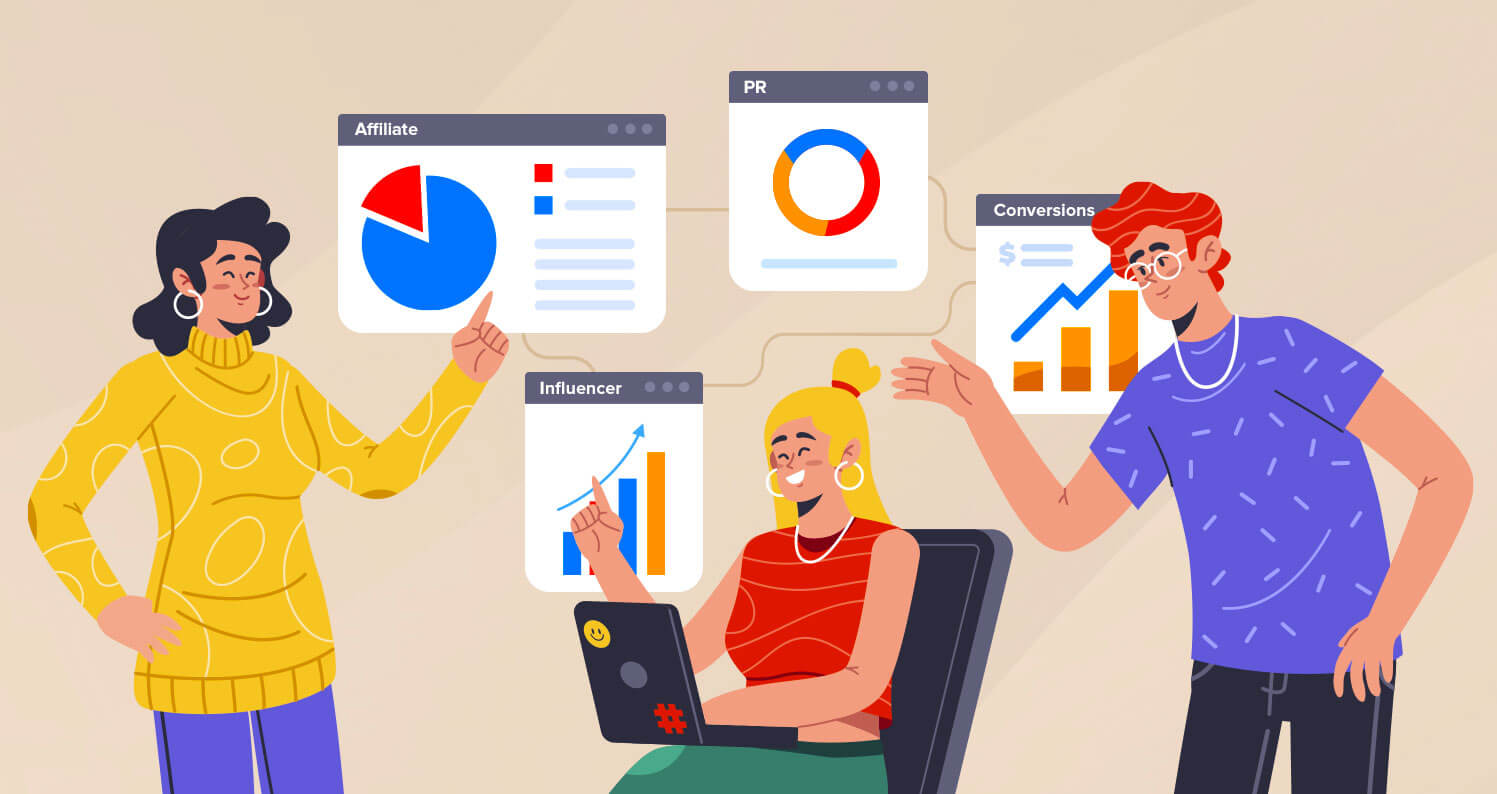
The partnerships that used to sit outside “affiliate” such as influencer and creator content, performance PR, and AI-driven discovery, are now some of the fastest-growing parts of the program itself.
We haven’t considered affiliate as one channel for a while now. We think of it as a full-funnel system, and we build brand programs around three convictions.
Influencer and creator partnerships aren’t an add-on. They’re a publisher category in their own right. On Awin’s network, creator share of affiliate revenue climbed from 15.9% to 19.5% in a single year, and in our own programs, we’ve seen creator partnerships perform to the same commercial standard as any other line item.
AI-driven discovery is changing what “ranking” means, and affiliate content has to earn its way into the answer now. As more consumers ask AI tools for recommendations instead of scrolling search results, the publishers, reviews, and comparison content that used to compete for position are now competing to be the source an AI model cites. We’re not alone in reorienting around this. Nearly 60% of brands surveyed in the PMA’s 2026 Brand Survey said they’re now building content partnerships specifically to influence AI-generated search results. We’ve built this shift directly into how we architect programs today.
Performance PR and editorial content aren’t a separate discipline. Product reviews, listicles, and commerce journalism sit in the middle of the funnel, feeding both traditional search and the AI models increasingly built on it. We treat them as affiliate placements because, functionally, that’s exactly what they’ve become.
Put together, the funnel now looks less like a single lane and more like a coordinated system. Top-of-funnel reach through influencer, creator, and AI discovery. Middle-of-funnel consideration through editorial content, reviews, and SEO/GEO. Bottom-of-funnel conversion through the coupon, loyalty, and cashback partners that built the channel’s reputation in the first place.
In our experience, programs that treat these as one coordinated system consistently outperform programs that manage them separately.
What Full-Funnel Looks Like in Practice
This isn’t a theoretical shift for Gen3 Marketing. As the industry’s largest standalone full-funnel affiliate marketing agency, we’ve spent nearly two decades building programs around the idea that affiliate’s real value shows up across the entire customer journey, not just the last click.
We run that approach through a four-part discipline.
- Interpreting program and market data to find what’s actually driving value.
- Architecting a strategy that blends affiliate, influencer, performance PR, and SEO/GEO around each client’s specific growth goals.
- Activating that plan across more than 450 programs on six continents.
- Continuously optimizing investment against incrementality data rather than last-click credit alone.
The results show up at the program level. Creator partnerships can perform to the same standard as any other line in the program, not just build awareness. And as clients evolve, they’re increasingly looking for affiliate and influencer or affiliate and performance PR together from day one, because these are no longer separate strategies to coordinate later.
The Takeaway for Brands
The brands winning in affiliate today aren’t the ones running the biggest coupon program. They’re the ones treating affiliate as a full-funnel growth channel that spans influencer, content, performance PR, and AI discovery alongside the publishers that built the category. And importantly, they’re the brands measuring it all accordingly. If your program still looks like it did five years ago, the opportunity cost is compounding.
Gen3 Marketing has spent the past two decades helping brands evolve with the industry to build exactly that kind of program. If you’re rethinking what affiliate should look like for your brand, we’d welcome the conversation.

Alongside Andy Cantos, Mike Tabasso is the co-founder and CEO of Gen3 Marketing. With decades of experience, Mike specializes in driving growth at the intersection of digital marketing and business transformation. He considers building and scaling the largest standalone affiliate and partner marketing agency in the world the highlight of his career. Mike is passionate about leveraging digital channels—including affiliate, influencer, paid, search, and SEO—to unlock new revenue streams and deepen customer engagement.